



Animals with the Best Night Vision: Top 10 Species
Have you ever tried walking through your house at night without any lights on? One wrong step onto a toy or bumping into furniture can make you rethink your decisions.Now picture moving through the wilderness in the dark, where your next meal could be hidden in the grass and predators might be close by. For some animals, this is just a normal night.
So, who are the animals with the best night vision and what makes their eyes unique? Let’s find out.

How Does Night Vision Work for Animals?
Our eyes use two main types of light-sensitive cells - rods help us see in dim light and detect movement, while cones help us see colors and fine details in brighter conditions.
Many animals that are active at night have eyes that are more sensitive to light than ours. Some have large pupils to let in extra light, while others have a reflective layer behind the retina called thetapetum lucidum. This layer bounces light back through the retina, giving the eye another chance to see it. It also makes some animals’ eyes look like they glow when light shines on them.
Even with great night vision, animals can’t see in total darkness. Most still need at least a bit of light from the moon, stars, or other sources.
10 Animals with the Best Night Vision
1. Owls: Masters of Low-Light Hunting
Owls are among the most impressive nighttime hunters. Their enormous, forward-facing eyes gather available light and help them judge distances while hunting.
Many owls have a high concentration of rod cells, making it easier to detect movement in dim conditions. Their eyes are also shaped more like tubes than round eyeballs, helping accommodate their size.
There is one difference: owls can’t move their eyes in their sockets like humans do. Instead, they turn their heads to look around. Some species can rotate their heads about 270 degrees, which helps them keep watch.
Owls also rely on exceptional hearing to locate prey. Their combination of sight and sound makes them formidable hunters, even in poor visibility.

2. Cats: The Nighttime Neighborhood Watch
Ever caught your cat staring into a dark corner where you can see absolutely nothing? Your pet might simply be better equipped to spot movement in dim light.
Domestic cats have large eyes, light-sensitive retinas, and a tapetum lucidum that helps them make better use of available light. This reflective layer also creates the familiar eyeshine you see when light hits a cat's eyes.
Cats can see in much dimmer conditions than humans, making them effective hunters around dawn, dusk, and at night. Their vision is particularly good at detecting movement, although they don't see every color or fine detail as well as people do.
So, your cat can’t see in complete darkness. It just has some helpful advantages when it’s dark. As for what it’s looking at, that remains a mystery.

3. Foxes: Sharp Eyes for the Night Shift
Foxes often hunt around dusk and at night, searching for small mammals and other food in grasslands, forests, and suburban areas.
Their eyes help them detect movement in low light, and the reflective layer behind their retinas improves their ability to use available light. Spotting a mouse moving through tall grass at twilight might be tricky for us, but it's part of a fox's routine.
Foxes don't depend on eyesight alone - their excellent hearing and sense of smell help them locate prey, too. Using several senses together makes them adaptable hunters in a wide range of environments.
Foxes are clever, resourceful, and much better prepared for nighttime adventures than we are.

4. Leopards: Big Cats Built for the Dark
Leopards are powerful predators with excellent low-light vision. Like domestic cats, they have a tapetum lucidum that helps their eyes make the most of available light.
Their ability to detect movement helps them locate prey in dense vegetation and dim conditions. Leopards may hunt at night or around twilight, depending on their surroundings and their prey's activity.
Vision is only one part of their hunting strategy. Leopards also rely on stealth, strength, and camouflage to approach prey without being noticed. Their spotted coats help break up their outline among shadows and vegetation.
With sharp senses and a talent for moving quietly, leopards are well equipped for life after sunset.

5. Deer: Always Watching for Danger
Deer might not be the first animals you think of when discussing night vision, but they're well-adapted to low-light conditions.
Many species are most active at dawn and dusk, periods known as crepuscular hours. Their eyes contain many rod cells, helping them detect movement in low light. Like many mammals, deer also have a tapetum lucidum.
Their eyes are positioned on the sides of their heads, giving them a wide field of view. This helps them notice potential danger approaching from different directions.
Deer don’t have forward-facing vision like many predators, but their wide view helps them survive. They can’t read fine print in the dark, but they are good at noticing when something seems off.

6. Raccoons: Nighttime Explorers
Raccoons are famous for investigating backyards and treating unsecured garbage cans like all-you-can-eat buffets. Their low-light vision helps them forage after dark.
These mostly nocturnal animals have eyes adapted to dim conditions, but eyesight isn't their only advantage - raccoons also have highly sensitive front paws that help them explore objects and locate food.
As omnivores, they eat a varied menu that can include fruit, insects, eggs, small animals, and human leftovers. Their combination of sight, touch, and smell helps them find food in many different environments.
So, if you hear rustling outside at night, it could be a raccoon carefully checking your trash.

7. Tarsiers: Tiny Primates with Huge Eyes
Tarsiers are small primates native to Southeast Asia, and their enormous eyes are hard to miss. Relative to their body size, their eyes are among the largest of any mammal.
These nocturnal hunters use their sensitive vision to locate insects and other small animals in dim forest environments. Their powerful hind legs help them leap between branches as they search for prey.
Like owls, tarsiers can't rotate their eyes in their sockets - instead, they turn their heads to look around.
Tarsiers may look like cartoon characters, but their large eyes are an important adaptation for hunting at night.

8. Geckos: Reptiles That Can See Color at Night
Some nocturnal geckos have a remarkable ability: they can distinguish colors in light levels where humans struggle to see color at all.
Their eyes contain specialized light-sensitive cells that help them see in dim conditions. Some species also have pupils that expand in darkness and narrow in brighter light, helping them adapt to changing conditions.This vision helps geckos find insects, navigate their surroundings, and detect potential threats after sunset.
Not all geckos have these abilities, but those with strong low-light color vision show that impressive night vision is not limited to mammals.

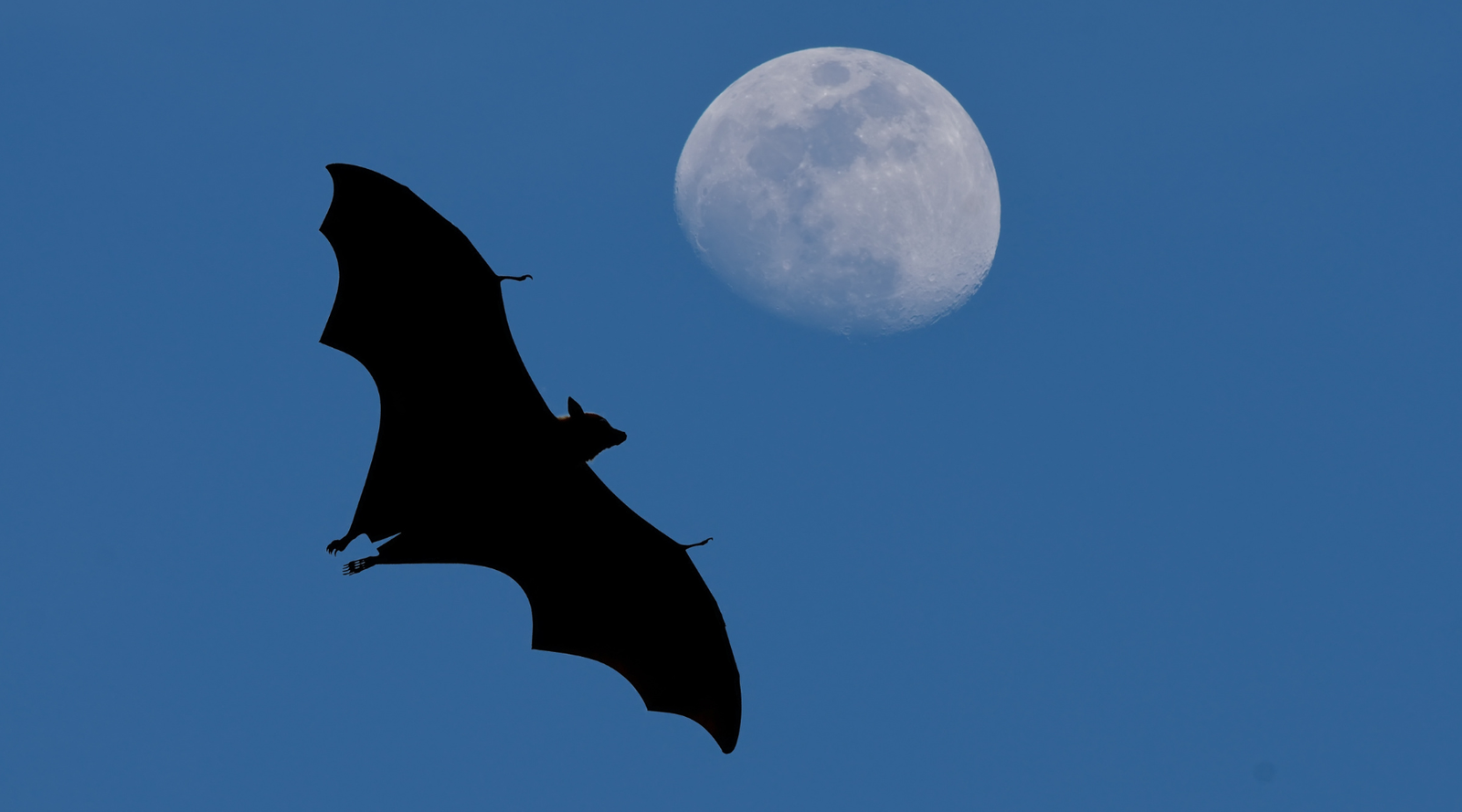
9. Bats: Night Flyers with Extra Senses
Bats are famous for their nighttime navigation, but here's a common misconception: bats aren't blind.
They have functioning eyes, and many species can see well. Some use vision to navigate and locate food, particularly when there's enough ambient light.
Many insect-eating bats also use echolocation, emitting high-frequency sounds and interpretting the returning echoes to detect obstacles and locate prey. It's a biological sonar system that works especially well in darkness.
Different species rely on vision and echolocation to different degrees. Fruit bats, for example, often have relatively large eyes and depend heavily on sight and smell when finding food.
Bats do well at night not only because of their eyesight, but also because they use several senses together.

10. Moths: Navigating the Night
Many moths are active after dark, visiting flowers, finding mates, and avoiding predators. Their compound eyes help them detect light and movement, and some species are adapted to function in very dim conditions.
Moths can use natural light sources, including moonlight, to help navigate. Some species also serve as nighttime pollinators, visiting flowers that release scents or produce nectar after sunset.
Moths often gather around porch lights, but artificial lighting can confuse their natural navigation and pull them away from their normal activities.Turning off unnecessary outdoor lights or choosing shielded lighting can help reduce disruption to moths and other nighttime wildlife.
Which Animal Has the Best Night Vision?
There's no single winner because different animals have different visual strengths.
Owls are impressive low-light hunters. Cats and leopards use dim light to track prey, while tarsiers have enormous eyes suited to nighttime hunting. Some geckos can distinguish colors in surprisingly low light, and bats combine vision with echolocation.
The best night vision depends on the environment and what an animal needs to do. Seeing movement, judging distance, finding tiny prey, and navigating while flying all require different abilities.
Nature does not give every animal the same abilities. Instead, it creates different solutions for different needs.

How Can We Help Nocturnal Animals?
You don't need a wildlife sanctuary in your backyard to help. A few small changes can support animals that are active at night.
- Reduce unnecessary outdoor lighting. Artificial light can disrupt the behavior of nocturnal wildlife, including insects and migrating birds.
- Keep pets safe. Supervised or secure pets are less likely to harm wildlife or encounter dangers themselves.
- Make windows safer for birds. Visible exterior markers and bird-safe window treatments can help reduce collisions.
- Protect natural habitats.Native plants, healthy trees, and diverse gardens provide food and shelter for wildlife.
- Observe from a distance.Avoid chasing animals or shining bright lights directly at them.
These simple steps can make neighborhoods more welcoming to wildlife, both during the day and at night.
Final Thoughts: A Whole Different World After Dark
Animals with great night vision remind us that the world stays active after sunset.Owls hunt, foxes look for food, geckos catch insects, and bats fly through the night. Each animal has special traits that help it succeed when people need a flashlight.
The next time you step outside after sunset, remember that the night may seem quiet, but there is often a lot happening that we cannot see.





Leave a comment (all fields required)