



5 Types of Deserts: From Hot Sands to Frozen Landscapes
When you hear the word “desert,” you might imagine endless sand dunes and searing sun, but deserts actually come in a surprising variety of forms.
At its core, a desert is defined by the amount of precipitation it receives, not by how hot it feels or how sandy it appears. If an area gets very little rain or snow each year, congratulations, it might be a desert. Even if it's cold enough to freeze your eyelashes.
So grab a metaphorical canteen and let’s wander through the five main types of deserts, each with its own unique climate and surprises. Sunscreen optional. A good jacket might also be required.

What Makes a Desert a Desert?
Before we break down the types, let’s clear something up. Deserts are classified by climate and location, not by vibes or how dramatic they look in movies.
Most deserts receive less than 10 inches of precipitation per year and some get far less. That lack of moisture shapes everything about them, from the plants and animals that inhabit the area to the way the land looks and feels.
Now that we're on the same page about what defines a desert, let’s meet the five main types and see why each is distinct.
5 Types of Desert

1. Hot and Dry Deserts
This is the classic, postcard version of a desert. If deserts had a mascot, this would be it.
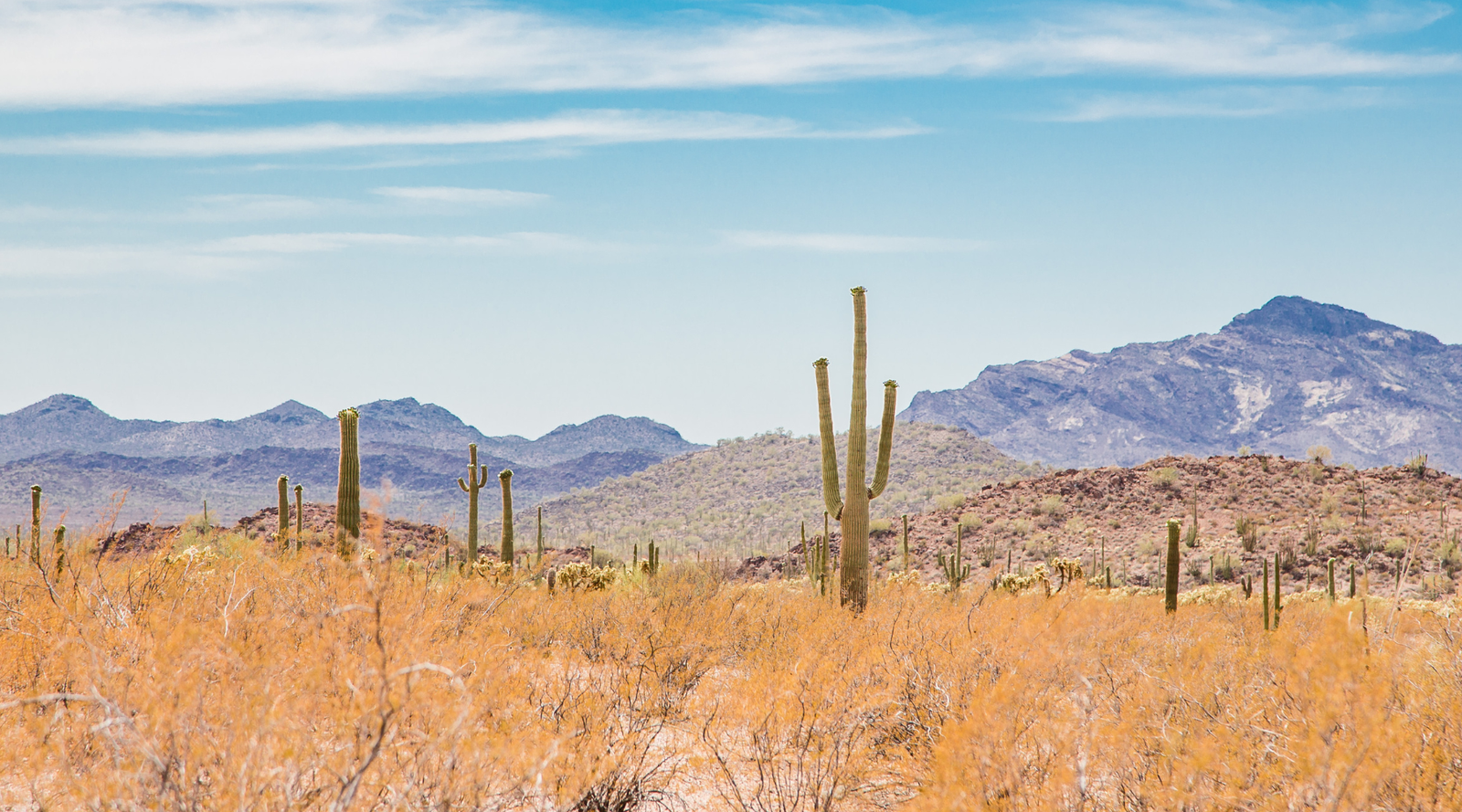
Hot and dry deserts are characterized by scorching daytime temperatures, cooler nights, and minimal rainfall. Think big sun, big sand, and big “why did I wear black today” energy.
What They’re Like
These deserts usually have clear skies, intense sunlight, and long stretches without rain. When rain does show up, it tends to arrive dramatically and leave just as fast.
Plants here are survival experts. Many store water, have deep root systems, or skip leaves entirely to avoid losing moisture. Animals often emerge at night to avoid the heat, demonstrating that being nocturnal can sometimes be a practical adaptation.
Famous Examples
- The Sahara Desert in Africa
- The Mojave Desert in the United States
- The Arabian Desert
Fun Fact
The Sahara is so big it covers most of northern Africa and it's larger than the entire continental United States. Let that sink in while you complain about your summer heat.

2. Semi-Arid Deserts
Semi-arid deserts are like the slightly more forgiving cousins of hot and dry deserts. Still dry, still tough, but with a bit more variety and slightly less intensity.
These deserts experience moderate temperatures compared to hot deserts, though summers can still be very warm. Winters are cooler, and rainfall is still scarce but a bit more reliable.
What They’re Like
Semi-arid deserts often feature a mix of grasses, shrubs, and small trees alongside desert plants. You might even see wildflowers after a rainy season, which feels like nature showing off.
Animals here are adaptable and often active during cooler parts of the day. You'll also find more biodiversity compared to harsher deserts.
Famous Examples
- The Great Basin Desert in the United States
- Parts of the Australian Outback
- The Patagonian Desert in South America
Fun Fact
The Great Basin is sometimes referred to as a cold desert, depending on who you ask. Desert categories can overlap, which is a polite way of saying nature doesn't always follow our neat little labels.

3. Coastal Deserts
Coastal deserts are the curveball of the desert world. They sit next to oceans, yet still manage to be extremely dry. It feels unfair, honestly.
These deserts are influenced by cold ocean currents that cool the air and limit rainfall. Instead of frequent rain, they often get fog, mist, or low clouds that drift in from the sea.
What They’re Like
Temperatures in coastal deserts tend to be milder compared to those in inland deserts. Days are not as brutally hot, and nights are not as cold. The landscape can look rocky, sandy, or even scrubby rather than dune-filled.
Plants here often rely on fog for moisture, absorbing water through leaves instead of roots. It's a clever workaround, and nature loves a workaround.
Famous Examples
- The Atacama Desert in Chile
- The Namib Desert in southern Africa
Fun Fact
The Atacama is considered one of the driest places on Earth. Some areas have gone decades without measurable rainfall. Fog is doing a lot of heavy lifting there.

4. Cold Deserts
This is where many people do a double-take. Yes, cold deserts are very much a thing. No sandstorms required.
Cold deserts experience low precipitation, just like other deserts, but they also have long, cold winters and short, mild summers. Most of the moisture they get falls as snow rather than rain.
What They’re Like
Temperatures can drop well below freezing, and snow may stick around for months. The ground is often rocky or gravelly, with sparse vegetation that can handle cold and dry conditions.
Animals in cold deserts are built for insulation and efficiency. Thick fur, fat layers, and seasonal behaviors help them survive.
Famous Examples
- The Gobi Desert in Asia
- Parts of the Great Basin Desert
- The Patagonian Desert (again, it gets around)
Fun Fact
The Gobi Desert can experience summer temperatures over 100 degrees Fahrenheit and winter temperatures far below zero. Talk about commitment to extremes.

5. Polar Deserts
If you thought cold deserts were surprising, polar deserts might really mess with your expectations.
Polar deserts are located near the Earth’s poles and are defined by extremely low precipitation. Despite the presence of all that ice and snow, these regions are technically considered deserts because snowfall is minimal.
What They’re Like
Temperatures remain cold year-round, with long periods of either darkness or daylight, depending on the season. The landscape is dominated by ice, snow, and bare rock.
Plant life is limited to hardy mosses, lichens, and algae. Animals tend to be highly specialized and often rely on the surrounding oceans for food.
Famous Examples
- Antarctica
- The Arctic Desert
Fun Fact
Antarctica is the largest desert on Earth. Bigger than the Sahara, bigger than the Arabian Desert, bigger than all of them. It just happens to be frozen solid.

Why Desert Types Matter
Understanding the different types of deserts helps explain why life looks so different from one desert to another. A camel thriving in a hot desert would not last long in Antarctica, and a polar bear would have a very confusing time in the Sahara.
Each desert type has its own ecosystems, challenges, and adaptations. They're not empty wastelands, even though they're sometimes labeled as such. Deserts are full of life that has figured out how to survive with very little water and a lot of patience.
They also play a big role in global climate patterns, weather systems, and biodiversity. Deserts may seem quiet, but they're doing important work behind the scenes.

Common Desert Myths, Quickly Debunked
Since we're here, let’s clear up a few desert misconceptions.
Myth: All deserts are hot.
Clearly not. Some are freezing, windy, and snowy.
Myth: Deserts are lifeless.
Absolutely not. Life in deserts is often more subtle and usually better at conserving water than in other environments.
Myth: Deserts are all sandy.
Many deserts are characterized by their rocky, icy, or gravel-covered landscapes. Sand dunes are only one part of the picture.
Many deserts are characterized by their rocky, icy, or gravel-covered landscapes. Sand dunes are only one part of the picture.

Final Thoughts
Deserts are proof that nature doesn't need constant rain to be impressive. From blazing hot sands to frozen polar plains, deserts come in many forms, each with its own unique personality and survival strategies.
So the next time someone says “it’s just a desert,” you can politely inform them that there are at least five types, and each one deserves a little respect. Or you can just nod and enjoy knowing something cool. Either works.
If nothing else, deserts remind us that life is adaptable, resilient, and sometimes thriving in places that seem completely inhospitable. Which is honestly a pretty good lesson, whether you're trekking across sand dunes or just trying to get through a busy week.




Leave a comment (all fields required)